

Call us: 0431170902
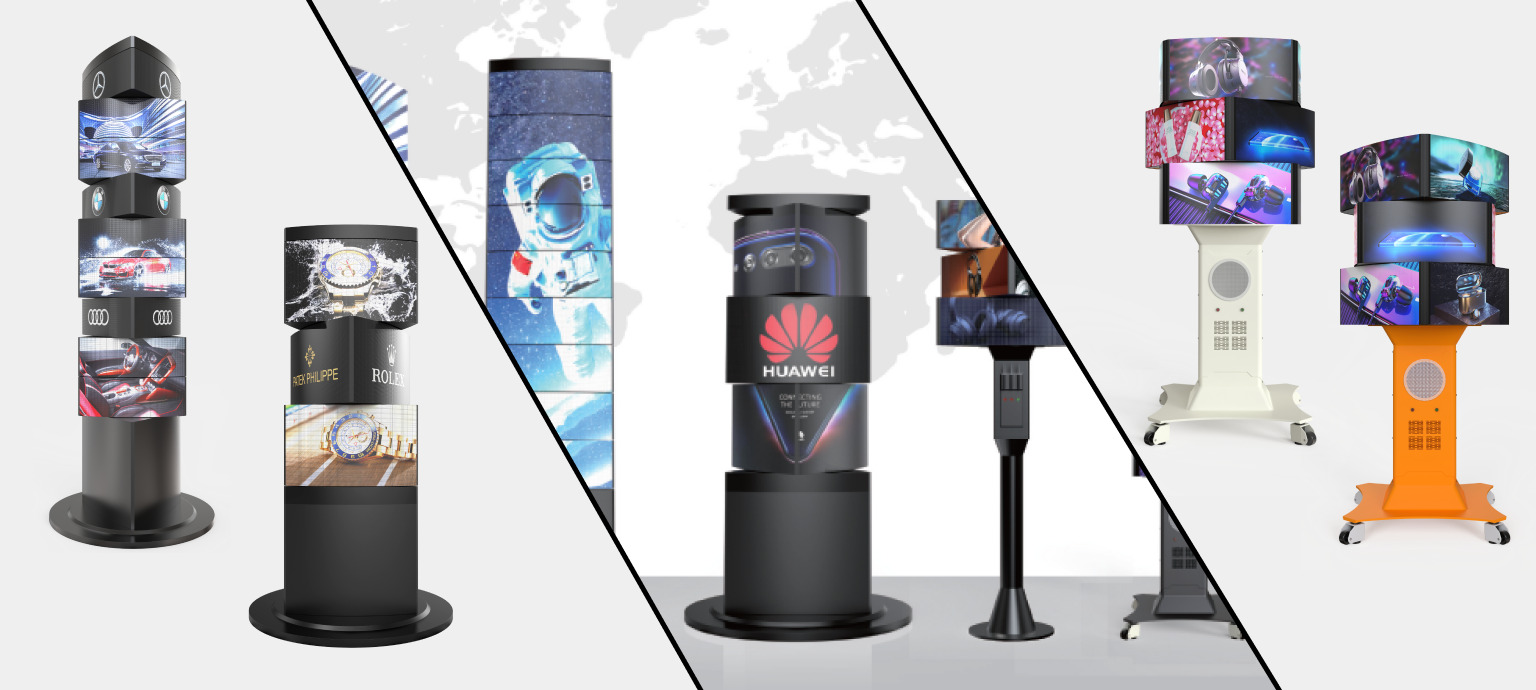

Sydney’s retail and hospitality strips are some of the most competitive advertising environments in Australia. Between Pitt Street Mall, Westfield centres in Parramatta and Bondi Junction, and the constant churn of pop-up activations in Barangaroo and Darling Harbour, a flat screen bolted to a wall simply doesn’t hold attention the way it used to. This is where rotary digital signage changes the equation. Instead of a static rectangle competing for a glance, a rotary LED screen physically turns, spins and cycles through multiple faces of content, creating genuine motion in a space that most shoppers walk straight past.
At BuyLED Screens, we supply and install rotary digital signage across Greater Sydney, from Campbelltown and Liverpool through to the CBD, Chatswood and North Sydney. It’s one of the more unusual products in our range, and for good reason: it’s a mechanical-meets-digital hybrid that very few signage suppliers in Australia can source, engineer and support properly.
What Is Rotary Digital Signage?
Rotary digital signage is an LED display built onto a motorised rotating chassis. Rather than a single fixed panel, the screen itself turns — spinning on its axis to present different faces, different content, or a continuous 360° visual to anyone walking around it. Because the display module is genuinely three-dimensional in its presentation (even though the underlying LED tiles are flat), it reads as sculptural rather than as “just another screen.” That’s the whole point: in a mall, a foyer, or a shopfront window, movement draws the eye before content does.
Our rotary digital signage units are built to German engineering standards for the rotating mechanism itself, which matters enormously for reliability. A poorly engineered motor in a rotating display will grind, stutter, or fail within months of daily commercial use. Ours are designed for continuous operation in busy retail and commercial environments, with a noise-free motor so the unit can run all day in a quiet boutique or corporate foyer without becoming a distraction in itself.
Key Features and Specifications
We offer rotary digital signage in a genuine range of configurations rather than a single one-size-fits-all unit, because a boutique in the Sydney CBD has very different space and budget constraints to a shopping centre atrium in Rouse Hill or a corporate lobby in North Sydney.
- Pixel pitch options: P2, P3, P3.5mm and P4, giving you a choice between ultra-fine detail for close-up viewing (P2) and a more budget-conscious option for content viewed from a few metres back (P4).
- Flexible LED modules: Available in 240mm x 120mm and 200mm x 200mm flat module sizes, which allow the curved or faceted geometry the rotation requires.
- Size range: From a compact 1600mm height x 500mm diameter unit right up to a statement 4390mm height x 1600mm diameter installation — genuinely scalable from a retail nook to a mall centrepiece.
- Nine-layer, three-sided display: Content can be shown differently on each face, so a single unit effectively delivers three advertising panels in the footprint of one.
- Eight rotation modes: Including positive and negative rotation, cross rotation, semi-synchronous and fully synchronous rotation, with adjustable rotation speed to suit the venue and the content.
- App-controlled: Every rotary screen connects through a mobile app, so content updates, rotation mode changes and speed adjustments can be managed without an on-site technician.
- Synchronised playback: Video and image content is automatically synchronised to the rotation, so footage doesn’t smear or misalign as the panel turns.
Why Sydney Businesses Are Adopting Rotary Digital Signage
Retail and Shopping Centres
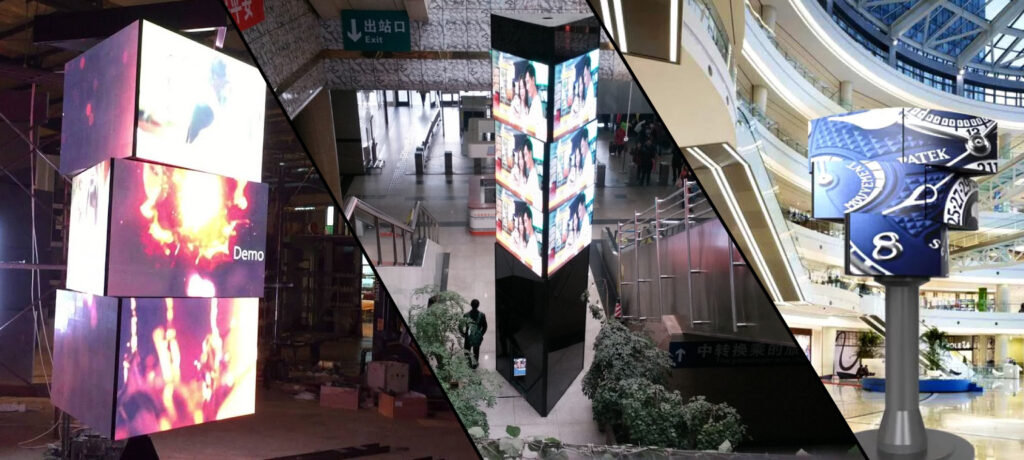
Sydney’s major retail precincts — Westfield Parramatta, Macarthur Square, Castle Towers, Rouse Hill Town Centre — are all fighting for the same thing: dwell time. A rotating LED display at a centre entrance or atrium doesn’t just advertise a tenant or a promotion, it becomes a landmark that shoppers use to orient themselves, which means repeat exposure every single visit. Because the unit shows different content on each face, centre management can run tenant advertising, wayfinding, and centre-wide promotions simultaneously without needing three separate screens.
Experiential and Event Marketing
Sydney’s event calendar — Vivid Sydney, Sydney Festival, product launches around Darling Harbour and The Rocks — rewards anything that photographs well and draws a crowd. A rotating digital signage installation is inherently more “shareable” on social media than a flat screen, because the motion itself is the hook. Brands activating pop-up spaces in Sydney increasingly ask specifically for something that isn’t a standard flat panel, and rotary screens fill that brief directly.
Corporate Foyers and Head Offices
For a corporate head office in the Sydney CBD or North Sydney, a rotary screen in reception delivers a different kind of message: it signals investment in brand presentation. Financial services firms, real estate groups, and technology companies with a public-facing lobby use rotary digital signage to display rotating brand messaging, investor information, and wayfinding without the space feeling cluttered with multiple screens.
Hospitality and Entertainment Venues
Pubs, clubs, and RSLs across Western and South-Western Sydney — areas like Liverpool, Campbelltown, and Bankstown, all within our regular service area — use rotary units for promotions, sports fixtures, and event schedules. Because the screen can be positioned centrally and viewed from multiple angles as patrons move through the venue, it replaces what would otherwise require several wall-mounted screens.
Installation and Compliance Considerations in NSW
Rotary digital signage is typically an indoor or semi-protected installation, so it generally avoids the outdoor advertising consent pathway that applies to street-facing digital billboards under NSW planning rules. That said, if you’re installing inside a shopping centre, airport, or transport hub, centre management or landlord approval is still standard practice, and we factor this into project planning from the outset. Our team provides CAD drawings for the installation structure and footprint sizing, which speeds up the approval conversation with centre management or building owners considerably.
Because the unit is mechanical as well as digital, structural mounting matters. We assess floor loading and clearance requirements — including rotation radius, so nothing in the surrounding space (planters, seating, foot traffic lines) intrudes into the sweep of the screen — as part of every rotary digital signage installation across Sydney.
Why Choose BuyLED Screens for Rotary Digital Signage in Sydney
Buy LED Screens is backed by Omega LED Lights, a parent company with a decade in the LED manufacturing and supply business. That matters with a product as specialised as rotary digital signage, because sourcing, spare parts, and technical support all depend on a supplier who genuinely understands the mechanism rather than one who has simply added it to a catalogue.
Every rotary LED screen we supply and install comes with a warranty (3 years is standard on our supply-and-install packages, with extended options available on request), free technical training so your staff can operate the app-based control system confidently, and our standard 3-hour support turnaround window for software issues. We also provide lifetime maintenance packages, so a rotary installation in a busy Sydney retail environment stays reliable well beyond the initial warranty period.
Because we design and quote every project individually, we’ll work with your dimensions, your ceiling height or floor space, and your content plan to recommend the right pixel pitch and rotation configuration — rather than trying to fit your venue around a single fixed product.
Rotary Digital Signage vs. Standard Flat-Panel Displays: What’s the Real Advantage?
It’s a fair question from any Sydney business weighing up the investment: is a rotating screen actually worth the premium over a standard flat LED panel? The honest answer depends on your goal. If you simply need to display information — a menu board, a directory, a static promotion — a flat panel does that job perfectly well and at a lower cost. Rotary digital signage earns its place when the goal is attention, not just information delivery.
Attention is measurably harder to win in 2026 than it was even five years ago. Sydney shoppers and office visitors are surrounded by screens — on their phones, in lifts, at the checkout, in the car park. A flat digital signage panel has become part of the visual furniture in many venues; people’s eyes slide past it the same way they slide past a noticeboard. Motion breaks that pattern. Human peripheral vision is wired to notice movement before it notices content, which is precisely why a rotating screen captures a glance that a static one wouldn’t have earned. For centre management, brand owners, and venue operators paying for advertising real estate by the square metre, that difference in “stopping power” has a direct commercial value — a screen nobody looks at is not delivering the return its floor space justifies, no matter how good the content on it is.
There’s also a secondary, less obvious advantage: floor space efficiency. Because a rotary unit can display three distinct faces of content in the footprint of a single freestanding screen, it effectively triples advertising inventory without tripling the physical footprint — a meaningful consideration in space-constrained environments like mall atriums, foyers, or retail floors where every square metre has a cost.
Planning Your Rotary Digital Signage Investment
Because rotary digital signage sits at a higher price point than a standard flat panel of comparable size, we recommend Sydney businesses think through a few questions before committing:
- Is the goal genuine attention-capture, or straightforward information display? If it’s the latter, a standard indoor LED screen may deliver better value.
- Will the unit be in a high-traffic, high-visibility location? Rotary screens deliver the strongest return in busy thoroughfares, atriums, and entrances where the “wow factor” reaches the largest possible audience.
- Do you have content that suits three separate faces, or would a single wraparound visual work better? This shapes which of the eight rotation modes and layer configurations we’d recommend for your installation.
- What’s the available floor space and ceiling height? Our size range spans from a compact 1600mm unit to a 4390mm statement piece, so there’s flexibility, but confirming site constraints early avoids redesign later in the process.
We work through each of these with every Sydney client during the initial consultation, so the final specification matches both the commercial goal and the physical realities of the site.
Frequently Asked Questions
Is rotary digital signage suitable for outdoor use? Most rotary installations are designed for indoor or covered environments. If you need a moving or dynamic display outdoors, we’ll typically recommend a combination of our outdoor LED screens with dynamic content rather than a rotating mechanism exposed to weather — talk to us about your specific site and we’ll advise honestly.
How loud is the rotation mechanism? The motor is engineered to run quietly under German manufacturing standards, and is designed for retail and corporate environments where ambient noise from the display itself would be a problem.
Can content be different on each face of the screen? Yes. With the three-sided, nine-layer display structure, you can run entirely different content, or a synchronised wraparound visual, depending on what suits your marketing goals.
How is content updated once installed? Through the companion mobile app, which our team will train your staff to use as part of every installation across Sydney.
What sizes are available for a smaller retail space? Our smallest standard configuration is 1600mm height with a 500mm diameter, which suits boutique retail, kiosk, or foyer applications where floor space is limited.
Does rotary digital signage cost significantly more than a flat panel of the same size? Yes, generally — the motorised rotation mechanism and three-sided display construction add cost compared to a standard flat panel. We’ll always give you a clear like-for-like comparison during quoting so you can weigh the investment against your specific goals.
How long does installation typically take? Installation timelines depend on the size of the unit and any structural or electrical preparation required on-site — we’ll provide a realistic project timeline once your configuration and location are confirmed.
Get a Rotary Digital Signage Quote for Your Sydney Venue
If you’re planning a shopping centre activation, a corporate lobby upgrade, or an event installation anywhere from the Sydney CBD to Campbelltown, Parramatta, or the Hills District, our team can scope the right rotary digital signage configuration for your space and budget.
Call BuyLED Screens on 1300 88 7207 or 0431 170 902, or email sales@buyledscreens.com.au to arrange a free consultation and CAD-backed quote for your rotary digital signage project.
